
- Material:
- Granite
- Category:
- Plutonic, Igneous
- Colour:
- Pale Grey to silver
- Colour variation:
- Uniform
- Grain/Crystal Size:
- Medium
- Place of origin:
- Scotland
- Rock Unit Name:
- Aberdeen Granite Pluton
- Geological Age:
- Ordovician
Notes:
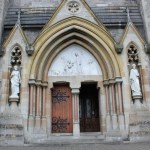
Aberdeen granite comes from the Aberdeen Granite Pluton, which formed during the Ordovician Period (c. 475 million years ago). The Aberdeen granite industry developed in the 18th century and continued to expand throughout the 19th century until Aberdeen became known as a world-renowned producer of granite. There were many granite quarries in Aberdeenshire, producing stone of varying colour and texture and exploited for a wide variety of uses, e.g. Peterhead (red and blue granite), Kenmay (silver muscovite-biotite granite) and Corrennie (salmon-red, biotite granite). The latter two quarries are still being worked. The most well known quarry extracting a grey, muscovite and biotite rich granite near Aberdeen was Rubislaw Quarry, which was active from 1740 to 1971. This granite is still quarried for aggregate in the Aberdeen area today. The stone was used to construct many of the buildings in Aberdeen ('the granite city') as well as being used throughout the UK and exported, e.g. Bell Rock Lighthouse in 1806, the House of Parliament in London, the Forth Bridge and Waterloo Bridge in London 1817 with other granites.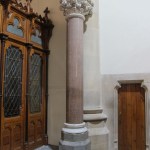





References
4358386
aberdeen_granite
1
apa-annotated-bibliography
50
default
4753
https://stonebuiltireland.com/wp-content/plugins/zotpress/