
- Material:
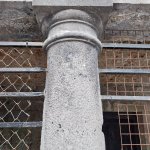
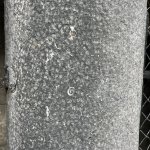
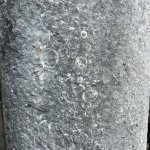
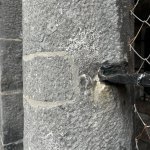
- Limestone
- Category:
- Carbonate, Sedimentary
- Alternative name(s):
- Kilkenny Black Limestone
- Colour:
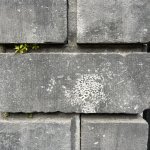
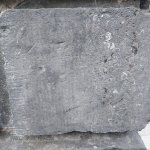
- Dark grey to black
- Colour variation:
- Uniform/Motttled
- Grain/Crystal Size:
- Fine
- Place of origin:
- Kilkenny, Ireland
- Rock Unit Name:
- Butlersgrove Formation, Ballyadams Formation
- Geological Age:
- Visean, Mississippian, Carboniferous
- Fossils:
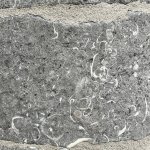
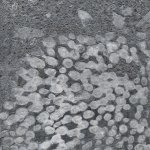
- brachiopods, bryozoans, colonial corals, crinoids, foraminifera, productid brachiopods, solitary corals
- Context of Use:
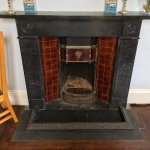
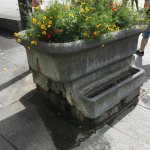
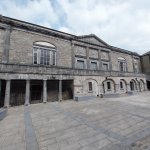
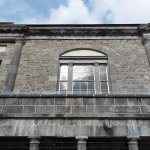
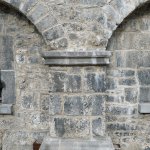
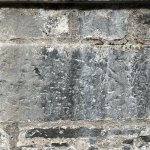
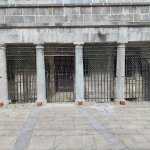
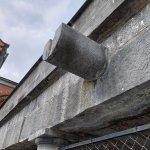
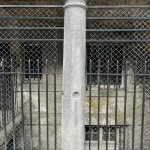
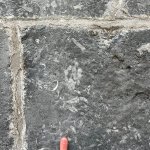
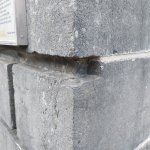
- Mainly decorative as polished stone and dressed stone in architectural elements (usually internal) and chimneypieces. Also used in headstones, floor tiles, paving and as a building stone.
Part of:
Notes:
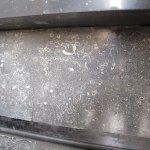
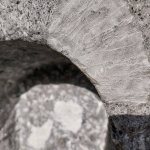
Kilkenny black marble extracted at Gallowshill (original Black Quarry) belongs to the Ballyadams Formation, comprising crinoidal wackestone/packstone limestones. The marble extracted at Archersgrove (mid-nineteenth century extension of the Black Quarry) and Butlersgrove belongs to the Butlersgrove Formation, which is a very dark grey, fine-grained, argillaceous mudstone/wackestone limestone. It is a black, bituminous calcarenite wackestone/packstone. Some beds are jet black, while others are highly fossiliferous, containing fragmentary solitary and colonial corals, crinoids, and large productid and other smaller brachiopods (seashells), as well as bryozoans, foraminifera, calcispheres and opaques seen in thin section.
Commercial varieties of Kilkenny black marble included:- Kilkenny Black: pure black, micritic, unfossiliferous carbonate mudstone.
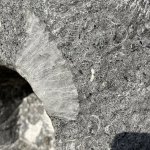
- Kilkenny Fossil: Bioclastic wackestone. Extracted from the Half Moon Bed in the Gallowshill portion of the Black Quarry. Dominated by disarticulated brachiopods including Davidsonina and athyridides with frequent turbinate solitary coral Axophyllum simplex and occasional colonial coral Diphyphyllum and planispiral gastropod Straparollus. The crescent shape of the brachiopod valves suggested the name, the Half Moon Bed.
- Kilkenny Bird's Eye: Bioclastic wackestone featuring a scattering of disarticulated crinoid ossicles.
- Kilkenny Candledrop: Packstone/Grainstone, rich in colonial corals that look like melted wax on the polished surface. In 1810, this coral-bearing variety, which was then called 'Madrapore limestone', was not as popular as the brachiopod-rich Half Moon Bed fossil marble.
- Kilkenny Feather Bed: A wackestone, containing solitary corals, which in longitudinal section resemble feathers, as well as the colonial coral Syringopora.









References
4358386
kilkenny_black_marble
1
apa-annotated-bibliography
50
default
4753
https://stonebuiltireland.com/wp-content/plugins/zotpress/