- Material:
- Limestone
- Category:
- Carbonate, Sedimentary
- Alternative name(s):
- Galway Black Limestone
- Colour:
- Dark Grey
- Colour variation:
- Uniform/Mottled
- Grain/Crystal Size:
- Fine
- Place of origin:
- Galway, Ireland
- Rock Unit Name:
- Burren Formation, Oldchapel Limestone Formation
- Geological Age:
- Visean, Mississippian, Carboniferous
- Fossils:
- algae, brachiopods, bryozoans, colonial corals, foraminifera, solitary corals
- Context of Use:
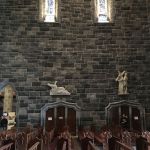
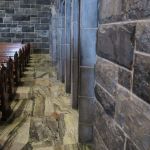
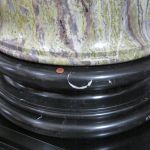
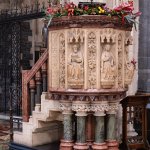
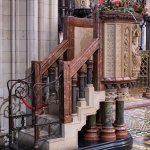
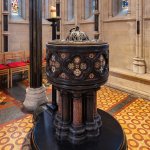
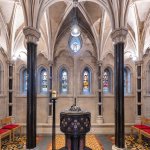
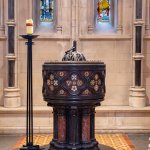
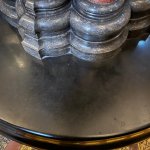
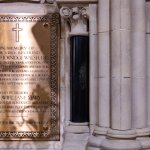
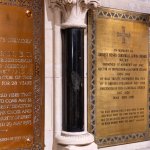
- Mainly decorative as polished stone and dressed stone in architectural elements (usually internal) and chimneypieces. Also used as a building stone.
Part of:
Notes:
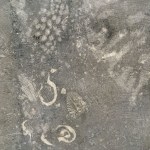
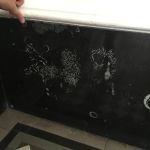
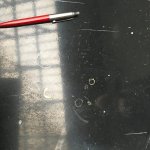
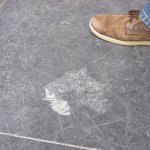
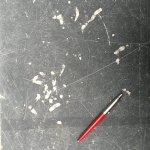
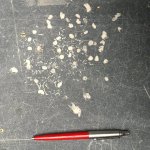
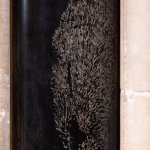
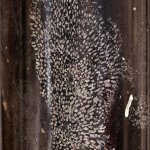
The Galway black marble extracted at Merlin Park, Menlough and Anglingham belongs to the Burren Formation of Upper Viséan (Asbian) age. It is a bituminous, fine-grained, clean, skeletal packstone/wackestone, which is susceptible to a good matt polish. On the surface, colonial corals, solitary corals and brachiopods are visible. Shellbeds with brachiopods and corals are generally confined to the shallowing phase of the Upper Visean limestones. The marble extracted at Oughterard belongs to the Oldchapel Limestone Formation of Lower Visean – Arundian age. In contrast to the clean, skeletal Burren Formation, the Oldchapel Formation consists of dark grey to black, fine-grained calcarenites – packstones and peloids.
In thin section, the stone from the classic quarry at Anglingham on the shores of Lough Corrib contains numerous unicellular foraminifera but little shelly fragments, whereas the Merlin Park stone, quarried east of Galway city ,contains algae, corals, bryozoans, a variety of foraminiferan species, and amorphous opaques.