- Material:
- Limestone
- Category:
- Carbonate, Sedimentary
- Alternative name(s):
- Edenderry Oolite, Edenderry Marble, Irish Drab
- Colour:
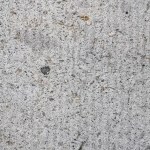
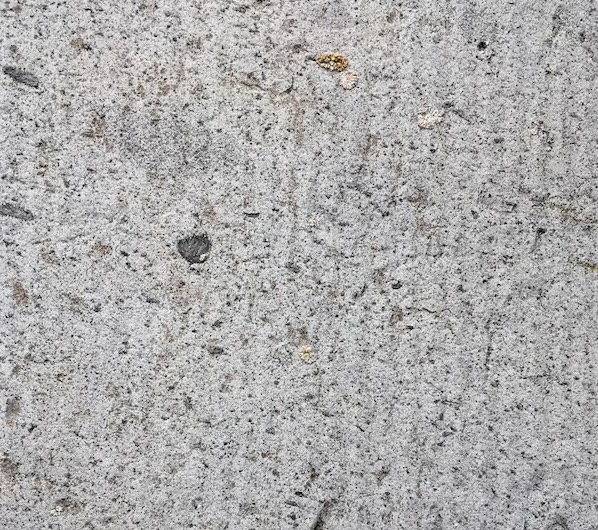
- Pale grey with small darker shelly fragments
- Grain/Crystal Size:
- Fine
- Place of origin:
- Kildare, Ireland
- Rock Unit Name:
- Edenderry Oolite Member (Allenwood Formation)
- Geological Age:
- Carboniferous, Dinantian, Chadian-Arundian
- GSI Rock Unit Code:
- AWed
- Context of Use:
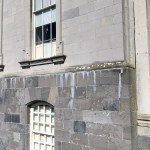
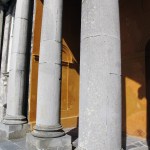
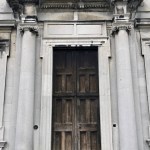
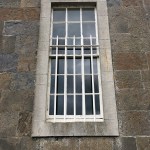
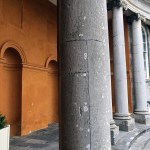
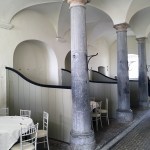
- Mainly used as a superior dimension stone in church building and country houses in the 18th and 19th centuries. Also used in monumental carving. Used for local road building in the twentieth century.
Notes:
A pale grey, compact, partly oolitic, partly crystalline limestone. Takes a fair polish and was sometimes referred to as a marble. Massive bedded, but sometimes displays cross-bedding. Deposited in a shallow water environment.
A piece of Edenderry Limestone, titled 'Irish Drab', was presented to the Sedgwick Museum, Cambridge, by E.S. Glanville Marble Merchant, Lower Erne Street, Dublin. John Watson compiled a descriptive catalogue of the marble and other ornamental specimens in the museum, which was published in 1916. In this catalogue the sample, obtained from Carrick Quarry, was said to represent the drab variety of Kildare Marble since it did not yield a flawless, jet black marble when polished like other limestones raised in the county. Nonetheless, its minute oolitic structure and receipt of a good polish rendered it useful for decorative purposes.
Results of state laboratory analysis (sample M.L. 8.):
CaCO₃ - 97.0%
MgCO₃ - 1.0%
Al₂O₃ - 0.6%
Fe₂O₃ - 0.6%
SiO₂ - 0.6%